Painting

But the more I looked into oil, the more it seemed like there was way more to it and a learning curve so I decided to start with acrylic instead and honestly I am glad I did. I was even a little intimated with acrylic because it was so vibrant and dried so quickly. But you don't really need much for painting with acrylic except paint, palette, paintbrush, water and whatever you want to paint on. Oh and a towel or something to dry off brushes. Something easily portable. And none of them are chemicals. After starting off my art journey with a passion for drawing with graphite and colored pencils where you don't need much ingredients to complete, it really helped me to start out with something similar.

After trying acrylic for a while and experimenting with color mixing (badly), different techniques, sizes and types of canvas, I was ready to try something different but I was not sure what. My last experiment with acrylic was working on other types of surfaces. After posting about my grandpa, I knew working with wood would be something really personal to me. I love the smell of wood and painting has reminded me of him in a way. Then I did a few paint by numbers similar to the top image, which were a great way to be present and create without having to make too many decisions. Sometimes creating involves too many decisions and after you have had a full week of making big decisions acting as an adult in the 'real' world, any decisions I can cut out helps.
I decided to go on a deep dive to learn about the differences between Acrylic, Oil, and Watercolor and I am glad I did. While searching I found another I forgot about- gouache, so I included that one too. It is interesting to learn about and I would like to try them all eventually.
I started with what I had learned already about oil and acrylic so it was easy to start. Then I started to compare with watercolor and realized how it had some positive and negatives from both oil and acrylic.
Honestly, I have been curious about watercolor for a while so this year I finally gave it a try and I found I was able to pick it up faster after starting with acrylic. You use two cups of water instead of one; one for fresh water and the other to rinse off your brush. Watercolor can be more on the pricey side like oil in that there are special brushes that hold more water and has to be used on special paper that holds a lot of water and doesn't buckle. High quality supplies is more important for watercolor than acrylic (similar to oil), though quality of paint is always important, in my opinion.
There are a bunch of different types of brushes, which I found confusing. The below video helps explain the difference. I started out with a mop brush and large round brush and it has worked very well.
Using it kind of reminds me of being a kid again experimenting with water and paint of different colors and how they interacted. The layers go on very transparent and can easily re-activated or color removed if wet and using a dry brush so it is very forgiving. Many aspects that I didn't like about working with acrylic were gone with watercolor. I find that I can take my time and go slower with watercolor because it doesn't dry as fast. For starting out I found a travel size set of 12 watercolors with even a travel brush included called Talens Art Creations Pocketbox (image below) and a Strathmore watercolor journal at a local store which have worked well for me so far.
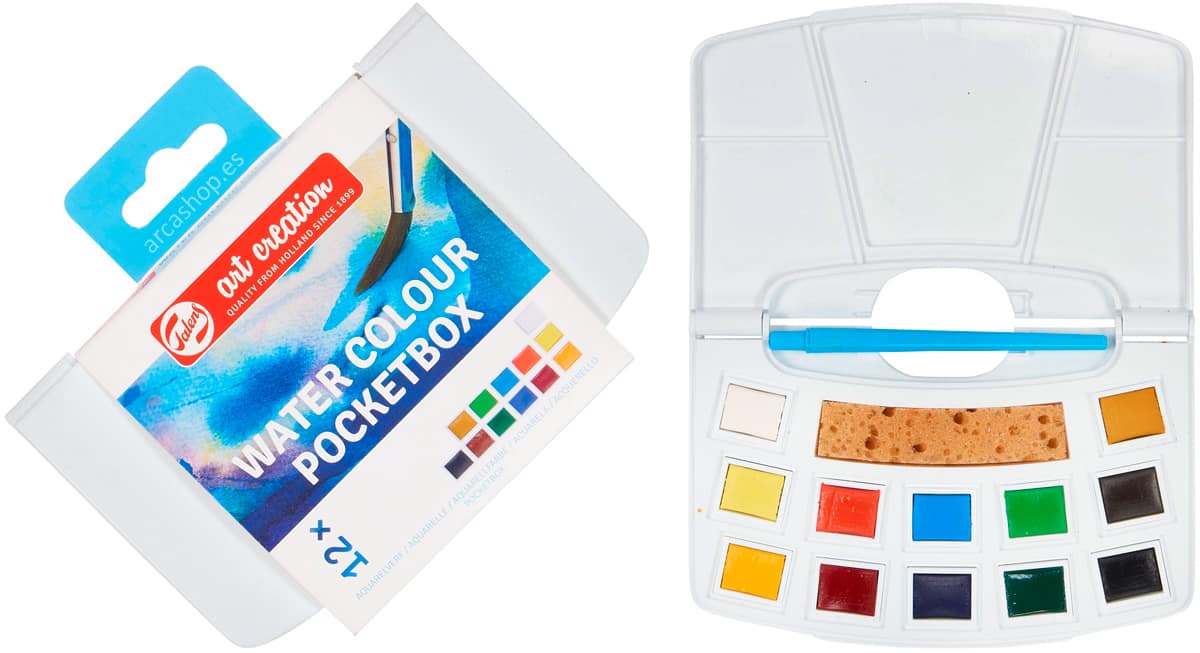
The main thing I paint is landscape which is perfect for watercolor as you can do small details or vast areas. It is easy to mix colors right there on the paper with watercolors and I find it looks really cool once dried. There is not as much flexibility with watercolor as with acrylic but I like that is seems to be the best of both acrylic/oil. I feel like watercolor is the most forgiving out of all the mediums, which is great for a newer painter like me and it is very easy to relax and experiment with. There are several different types of techniques you can do with it and I really enjoy it.
Gouache is something I had never heard about until recently. It is similar to watercolor, with the same supplies needed, but more opaque with a matte finish. That word has thrown me off in the past but that means its not as transparent. It blends better than watercolor and can be reactivated on paper. Gouache finished paintings need to be framed behind glass or moisture will mess them up. That is a huge point in acrylic's favor, but I have really liked the flexibility and slower dry time of watercolors.
Oil
- Takes a long time to dry- no rush. more time to blend,
- Layers important to avoid cracking= thinner on bottom and thicker on top
- Color stays vivid for a long time but can turn yellow
- Careful with surface chosen- oil is acidic, surface will need priming
- More components, more expensive
- Use of toxic chemicals and solvent, harder to clean up after
- Can go over completely dry watercolor or acrylics 'underpainting'
Acrylic
- Fast drying, harder to mix colors as its permanent once dry
- More versatile than oil, can mimic other styles
- Colors look different dry vs wet but don't fade
- More resistant to cracking than oil
- Adheres to almost any surface
- Less materials needed and easy, fast clean up.
- Good for adding texture
- Can work light to dark to vice versa
- Can be painted over watercolor but not oil
- High quality paint = most important
Watercolor
- Can mix and/or darken colors though layers
- Not as fast drying as acrylic but not as long as oil
- Softer, transparent, detailed, thinner
- Used with special paper with special brushes
- Easily lifted/moved when still wet
- Work dark to light only
- Hard to paint over dry acrylic as its water-resistant
- High quality paper= most important
Gouache
- Similar to watercolor, with same supplies
- More opaque than watercolors
- Blends easier and can easily be reactivated on paper
- Can work light to dark to vice versa
- Must be framed to avoid being reactivated
- Matte finish
Comments
Post a Comment